COLLECTION
Search collection
FEARS TEARS
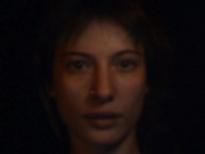
Charley CaseFear and tears are brought to a young woman’s initially relaxed face through Charley Case’s rythmic manipulations. As the image turns darker and darker, the woman’s face is barely discernible any more. Fears Tears is part of the project NOW WON....
LIED VAN MIJN LAND
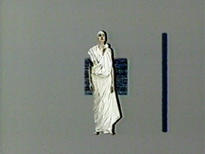
Koen Theys - Frank TheysThe German 19th century composer Richard Wagner wrote the operas Ring des Nibelungen and Parcifal in order to shape his vision on the relationships in society. Koen and Frank Theys have treated Wagner’s Ring with an immoral curiosity and have enriched it with personal and contemporary themes...
LANDSCHAP VAN KERKEN
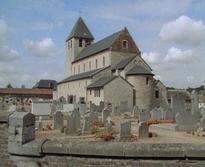
Jef CornelisBased on the 1987 book with the same title by Geert Bekaert, which explores the enigma of the Belgian historical church buildings...
VIDÉO HEBDO 38
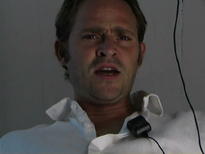
Claude CattelainClaude Cattelain has something to use, but he cuts out all the words he spoke....
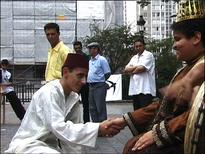
THE STREETTAPES
Els DietvorstThese tapes are an impression of the 'live'-rehearsals for The return of the swallows in July 2002 at the Anneessens square in Brussels. These 'live'-rehearsals were an important turning point in the project. All the actors saw each other for the first time. They were assigned to stay in character whatever happened and to challenge each other by improvising...
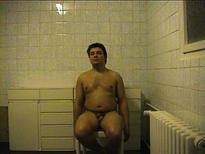
MIRROR MODE
Emilio López-MencheroThe Mirror Mode series is an ensemble of short works by Emilio López-Menchero released in 1999. The series exploits the technical possibilities of his miniDV handycam and makes use of the reversed screen display of the camera as a tool to establish a relation between the artist – who records himself without the help of a cameraman – and the frame of camera...
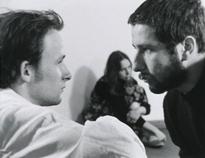
RITUS
André ColinetThis film is told through flashbacks, but without making it too obvious from the start. A man raped a girl, whom he knew from his group of friends, at night on a street corner. Images from this incident reappear throughout the film. Inside an empty room, except for a table and some chairs, people are drinking and talking. Among them there are the girl and the man. He seems nervous and angry...
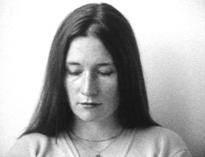
LAURIEN, SEPTEMBER 2001
Manon de BoerFrom her dozens of portraits, Manon de Boer chose two, ‘Robert, June 1996’ and ‘Laurien, March 1996’, which she would - and still does - portray over an over again: the same individuals, in the same position, and within the same visual frame...
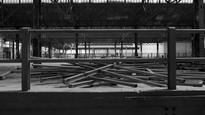
TRACE
Peter DownsbroughTRACE revisits the site of an earlier Downsbrough video, A] PART (2009). The location for both works, Brussels’s iconic Citroen garage, opened to great fanfare in 1934 as the largest automobile service center in Europe...
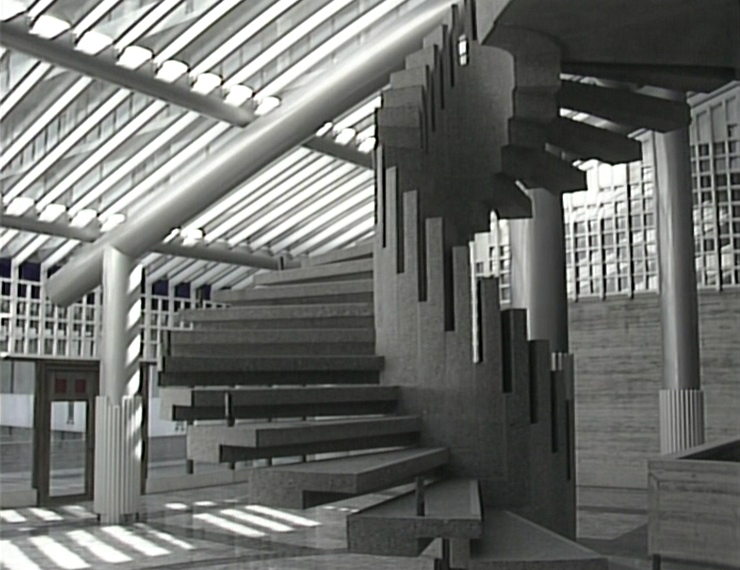
L'ÉNIGME DU SPHINX
Jef CornelisThe work of architect Charles Vandenhove is an exploration of architecture in its fundamental simplicity and inevitable variety of form. His work, and in addition today’s architecture, is explained in the Liège Hotel Torrentius, a mansion from the 16th century being renovated, and this document’s focal point...